
Salon Website Design in Pennsylvania: What Beauty Businesses Need to Turn Visitors into Bookings
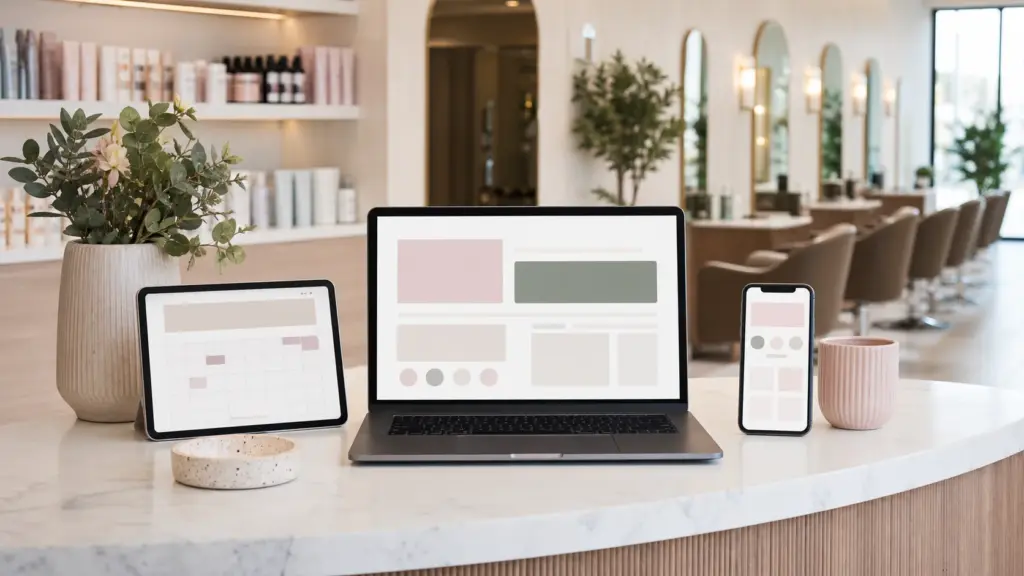
If someone is looking for a stylist, esthetician, nail tech, barber, or spa in Pennsylvania, your website often gets judged before your work does. They want to know what you offer, what the vibe feels like, whether you serve their area, and how easy it is to book.
That is why salon website design Pennsylvania businesses can actually use is about more than a pretty homepage. Your site needs to help real people make a fast decision: “Is this the right place for me, and can I book without friction?”
Here is what a salon, spa, or beauty business website should include if the goal is more appointment requests — not just more compliments.
Start with the services people are already searching for
Beauty clients rarely search in one generic way. They search for specific services, locations, and needs:
- hair color specialist near me
- bridal makeup in Chambersburg PA
- med spa facial near Harrisburg
- nail salon with online booking
- curly hair stylist in Pennsylvania
- lash extensions near me
A strong salon website should give each core service enough detail to match that intent. A single “Services” page with a short list can look nice, but it often does not give Google or visitors enough context.
At minimum, include:
- service names written the way clients search
- short descriptions of who each service is for
- pricing ranges or “starting at” guidance if appropriate
- appointment length or consultation notes
- preparation instructions when helpful
- clear booking buttons near each service section
You do not need to turn every service into a novel. But you do need enough useful detail for someone to feel confident taking the next step.
Make booking obvious on every important page
For salons and spas, the website has one big job: make it easy to book or request an appointment.
Your booking button should not hide in the footer, only appear once on the homepage, or rely on visitors hunting through a social media profile. Put it where people naturally decide:
- in the hero section
- after service descriptions
- near stylist or provider bios
- on mobile sticky buttons if it fits the design
- in the main navigation
- at the end of FAQs
If you use a third-party booking platform, the website should still explain your services clearly before sending visitors away. Think of your site as the trust-building layer and your booking software as the transaction layer.
Show real trust signals, not just stock beauty language
Most salon websites say some version of “luxury experience,” “professional service,” or “beautiful results.” Those phrases are fine, but they do not prove much by themselves.
Better trust signals include:
- real portfolio photos or before-and-after galleries
- stylist or provider bios with specialties
- client reviews and testimonials
- years of experience or training highlights
- sanitation, consultation, or patch-test policies when relevant
- local service-area language for your town or region
- links to active social profiles if they show current work
For Pennsylvania beauty businesses, local proof matters. A visitor in York, Lancaster, Chambersburg, Harrisburg, or Philadelphia wants to know you understand the area they live in, not just that you have a nice template.
Build pages around services, locations, and client questions
A salon or spa website can usually grow from three content layers:
1. Core service pages
These cover your main revenue-driving services: hair color, extensions, facials, brows, lashes, massage, bridal beauty, barbering, nails, or skincare treatments.
2. Local pages or local sections
If you serve multiple nearby areas, your site can mention them naturally. This does not mean making thin copy-and-paste city pages. It means adding helpful local context, directions, neighborhood references, parking notes, and examples of clients you serve.
3. Helpful blog or FAQ content
Support content can answer questions clients ask before booking:
- How often should I schedule a facial?
- What should I do before a color appointment?
- How far in advance should I book bridal hair and makeup?
- What is the difference between balayage and highlights?
- How do I choose the right skincare treatment?
This type of content helps visitors and gives your website more ways to show up for local searches.
Design for mobile first, because beauty clients browse on phones
A beautiful desktop layout is nice. A smooth mobile layout is mandatory.
Many beauty clients discover a salon while scrolling on their phone, comparing options, checking reviews, or clicking from Google Maps. Your mobile site should load quickly and make the next step obvious.
Check the mobile experience for:
- large, tappable booking buttons
- fast-loading images
- simple service menus
- easy-to-read pricing or service details
- visible phone number or contact option
- short forms that do not feel like homework
- no awkward popups blocking the booking path
If a visitor has to pinch, zoom, wait, or dig through five screens to book, the design is quietly costing you appointments.
Use photos strategically without slowing everything down
Beauty businesses need visuals. Your photos are part of the sales process. But giant uncompressed image galleries can make a site slow, especially on mobile.
A better approach is to use curated galleries with optimized images. Show your best work, group photos by service type, and keep the page fast enough that visitors do not bounce before they see the results.
This is where website speed and design work together. A slow salon website can feel outdated even if the photos are gorgeous.
Add local SEO basics behind the scenes
A good salon website should support your Google Business Profile and local visibility. That includes:
- a consistent business name, address, and phone number if you have a physical location
- embedded or linked Google reviews when appropriate
- service-area language on relevant pages
- title tags and meta descriptions that mention services and location
- schema markup for the business and services where appropriate
- internal links between service pages, blog posts, and contact or booking pages
This does not mean stuffing “Pennsylvania salon website” into every sentence. It means building a website that clearly explains what you do, where you do it, and why someone should trust you.
Common salon website mistakes that reduce bookings
A salon website can look stylish and still underperform. Watch for these common issues:
- booking links that are hard to find
- no clear service descriptions
- outdated photos or inactive social feeds
- slow mobile pages
- missing location details
- vague “contact us” calls to action
- no reviews or proof of experience
- service pages with very little text
- no FAQ content for high-intent questions
The fix is not always a full redesign. Sometimes a focused update to service pages, booking CTAs, local SEO, and image performance can make the site much more useful.
When a salon needs a redesign instead of a quick update
A quick website refresh may be enough if the structure is solid and the site mostly needs better copy, photos, or calls to action.
A redesign is usually smarter when:
- the site is not mobile friendly
- booking is confusing or broken
- pages load slowly
- the design no longer matches your brand
- services have changed but the site has not
- you are expanding into new locations or specialties
- the site does not support SEO basics
If your salon or spa is growing, your website should grow with it. Your online experience should feel as polished as the in-person experience clients are about to book.
A better salon website helps people say yes faster
The best salon and spa websites are not just pretty brochures. They answer questions, show real results, build local trust, and guide people toward booking.
For Pennsylvania beauty businesses, that means combining strong visuals with practical structure: service details, local SEO, mobile speed, easy booking, and ongoing maintenance.
If your current website looks good but does not bring in the right appointment requests, Sleek Website Design can help you tighten the strategy, redesign the experience, and build a site that supports real business goals.
Ready to make your beauty business easier to find and easier to book? Start with a website strategy built for local clients, search visibility, and smooth appointment requests.