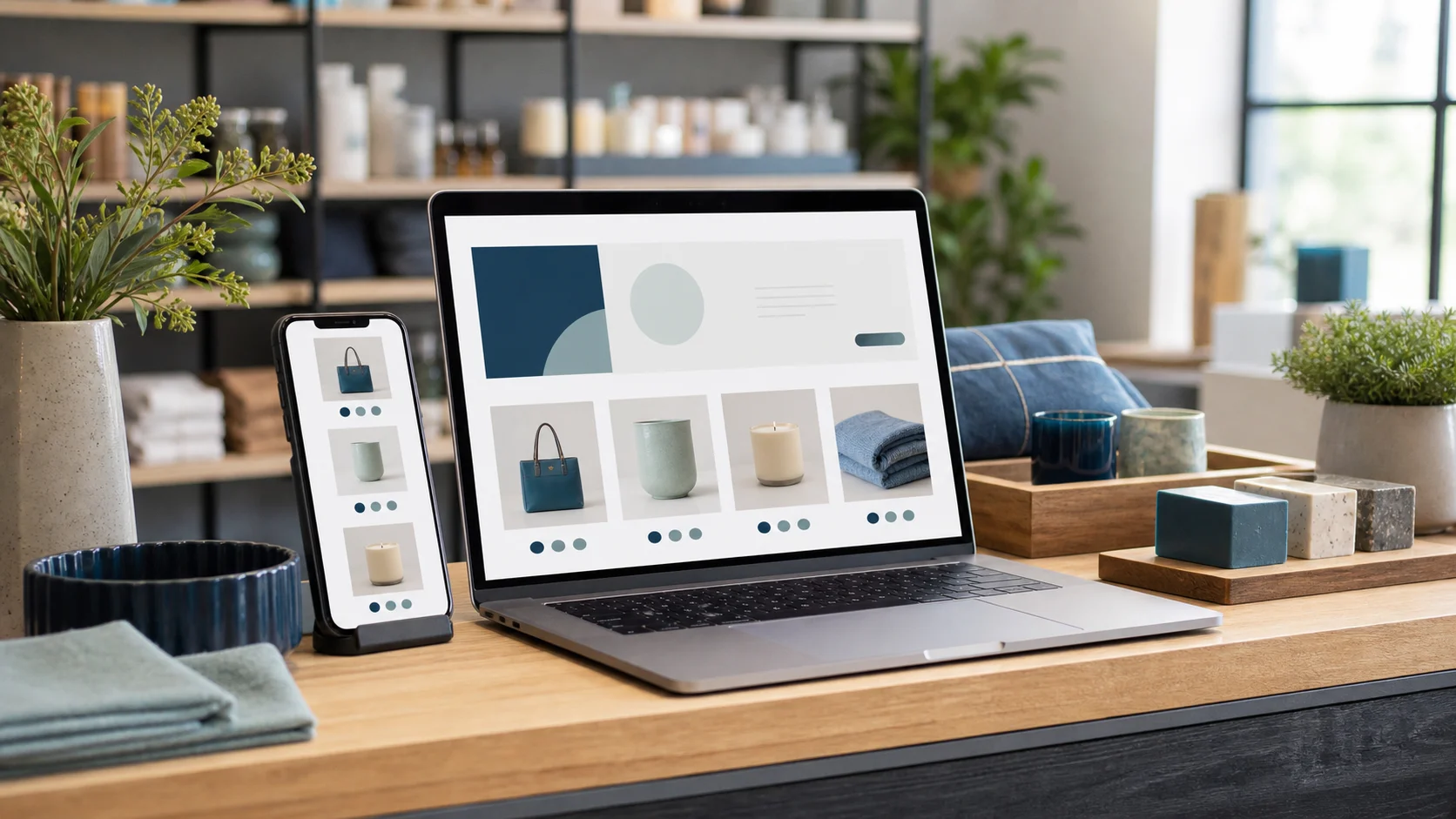
Retail Website Design in Pennsylvania: What Local Stores Need to Turn Browsers into Buyers
A retail website has to do more than look pretty. For a Pennsylvania boutique, gift shop, specialty store, showroom, or local retailer, the website needs to help shoppers answer a few very practical questions fast: What do you sell? Can I trust this store? Are you near me? Can I buy online, reserve an item, or contact you before I drive over?
That is why retail website design is a little different from a general small business website. A service business may be focused on quote requests or calls. A local store needs to support product discovery, foot traffic, online orders, seasonal promotions, local SEO, and repeat visits — usually all from a phone screen while someone is comparing options.
If your store relies on Instagram, Facebook, marketplace listings, or word of mouth alone, your website might be the missing piece that turns casual browsers into confident buyers.
Why retail website design matters for local stores
Retail shoppers move quickly. They may find your business through Google, a social post, a recommendation, or a "near me" search. When they land on your website, they need clarity right away.
A strong local retail website helps you:
- Show what you sell before someone visits the store.
- Build trust with real photos, policies, reviews, and clear contact information.
- Make mobile browsing simple for busy shoppers.
- Support local SEO so nearby customers can find you.
- Promote seasonal collections, events, sales, gift cards, or new arrivals.
- Reduce repetitive questions about hours, location, shipping, returns, and pickup.
- Connect online interest to in-store visits, calls, messages, or purchases.
For many Pennsylvania retail businesses, the goal is not always a giant ecommerce store on day one. Sometimes the first win is a clean, fast, trustworthy website that makes the store easier to discover and easier to shop.
Start with the shopper journey
Before choosing layouts, colors, or ecommerce tools, map the shopper journey. Think about how someone moves from "I might need this" to "I trust this store enough to visit or buy."
A useful retail website usually answers these questions:
- What kind of products do you carry?
- Who are your products for?
- Where are you located?
- What makes your store different from big-box or marketplace options?
- Can shoppers buy online, request availability, book an appointment, or call?
- Are there delivery, pickup, shipping, or return details they should know?
- What should a first-time customer expect?
This is the foundation of conversion-focused retail website design. The site should not force shoppers to dig through vague pages or outdated social posts to understand your store.
Essential pages for a retail website
A small retail website does not need to be complicated, but it should be complete. These pages are usually the most important.
Homepage
Your homepage should quickly explain what you sell, who you serve, and what shoppers should do next. Include a clear headline, product category highlights, a few trust signals, and buttons for actions like "Shop New Arrivals," "Visit the Store," "View Products," or "Contact Us."
If you serve a local area, mention your city or region naturally. For example, a boutique in Chambersburg, Carlisle, Lancaster, or York should not hide its location in the footer only.
Product or collection pages
Even if you do not sell everything online, product and collection pages can help shoppers understand your inventory. A boutique might highlight clothing, accessories, gifts, or seasonal collections. A specialty store might show product categories, brands carried, featured items, or custom-order options.
Good collection pages use real images, short descriptions, helpful filters when needed, and calls to action that match how the store actually operates.
About page
Local shoppers often care who they are buying from. Your About page can explain the story behind the store, your values, your team, and what makes the shopping experience different.
This does not need to be overly formal. A friendly, specific About page can do a lot of trust-building work.
Location and contact page
Make your address, phone number, hours, directions, parking notes, and contact options easy to find. If your store has seasonal hours or event hours, keep them updated.
This page should also support local SEO with clear location language and consistent business information.
FAQ page or section
Retail FAQs can answer common questions before they become abandoned visits or missed sales. Useful topics include returns, exchanges, shipping, pickup, sizing, gift cards, special orders, appointments, accessibility, and holiday deadlines.
Features that help retail websites convert
A retail website should make shopping feel easy. These features are especially helpful for local stores.
Mobile-first design
Many shoppers will visit your site from a phone while they are out, scrolling social media, or comparing local options. Mobile design should be fast, readable, and simple to navigate.
Buttons should be easy to tap. Product images should load quickly. Contact details should not be buried. If the mobile experience feels clunky, shoppers may never make it to the store.
Strong product photography
Retail websites depend on visuals. Use clear product photos, store photos, and lifestyle images when possible. Real photos from your shop can make the website feel more trustworthy and local than generic stock images.
You do not need a huge photo shoot to start. Even a consistent set of clean images can make the site feel more current and more shoppable.
Clear calls to action
Retail CTAs should match the customer journey. Depending on your business model, useful CTAs might include:
- Shop online.
- View collections.
- Check availability.
- Call the store.
- Get directions.
- Book a fitting or consultation.
- Join the email list.
- Buy a gift card.
The key is to avoid leaving shoppers at a dead end. Every major section should guide them toward a useful next step.
Local SEO structure
Retailers often need visibility for searches like "gift shop near me," "boutique in [city]," "formalwear store Pennsylvania," or "local home goods store." Your website should support those searches with location-focused content, optimized title tags, helpful headings, internal links, and accurate business information.
A good local SEO setup also connects your website with your Google Business Profile, reviews, and location pages where appropriate.
Fast pages and clean navigation
Retail sites can get slow when they include large product images, too many apps, or heavy page builders. Speed matters for both shoppers and SEO. If your pages take too long to load, visitors may leave before they see the product that would have convinced them.
Keep navigation simple: collections, location, about, FAQs, and contact should be obvious.
Ecommerce vs. local catalog: which does your store need?
Not every retail business needs a full ecommerce build right away. The right path depends on your products, operations, and goals.
A full ecommerce website may make sense if you want to sell products online, manage inventory, process payments, ship orders, offer pickup, or grow beyond local foot traffic.
A local catalog website may be enough if shoppers mostly visit in person but need to preview your products, learn your style, check hours, or contact you about availability.
A hybrid approach can also work well. For example, you might sell gift cards and featured products online while using collection pages to showcase inventory that changes often.
The best retail website design choice is the one your team can actually maintain. A beautiful ecommerce site with outdated inventory can frustrate shoppers. A simpler site that is accurate, fast, and easy to update may convert better.
Common retail website mistakes
A lot of local store websites lose sales because of small but fixable issues.
Hiding the location
If shoppers cannot quickly tell where you are, they may bounce. Your location should be easy to find on the homepage, contact page, footer, and local SEO content.
Relying only on social media
Social platforms are useful, but they are not a replacement for a website you control. Posts get buried, links change, and shoppers may not want to search through a feed to find hours, policies, or product details.
Using generic product descriptions
Generic descriptions do not help shoppers understand why an item is right for them. Even short, specific descriptions can improve trust and help search engines understand your products.
Making policies hard to find
Returns, exchanges, pickup, shipping, and gift card details should be easy to access. Clear policies reduce hesitation.
Forgetting repeat customers
Retail websites should not only chase first-time visitors. Email signup sections, event announcements, loyalty information, and seasonal landing pages can bring past customers back.
How Sleek Website Design can help
Sleek Website Design builds practical, SEO-friendly websites for Pennsylvania small businesses that need more than a nice-looking homepage. For a retail store, that means creating a site that supports real customer actions: browsing products, finding the store, understanding policies, trusting the brand, and taking the next step.
A strong retail site may connect several services together:
- Web design and redesign for a cleaner, more conversion-focused experience.
- Local SEO support so nearby shoppers can discover the store.
- Website maintenance to keep pages, images, plugins, and information current.
- Speed and mobile improvements so shoppers do not abandon the site.
That combination matters because retail websites are living tools. Products change, seasons change, hours change, promotions change, and shoppers expect the website to keep up.
Retail website design checklist
Use this quick checklist to evaluate your current retail website:
- Is your store location visible within a few seconds?
- Does the homepage clearly explain what you sell?
- Are product categories or collections easy to browse?
- Are your hours, contact details, and policies current?
- Does the mobile version load quickly and feel easy to use?
- Are there clear calls to action for online and in-store shoppers?
- Do you have local SEO content for your city or region?
- Are photos current, clear, and consistent?
- Can shoppers find reviews, trust signals, or proof that your store is active?
- Is the site easy for your team to update?
If several of those answers are "not really," your website may be costing you visits, calls, and sales.
The bottom line
Retail website design is about making your store easier to trust, easier to find, and easier to shop. For Pennsylvania retailers, the right website can support both local foot traffic and online buying decisions without making the process feel overwhelming.
If your current website feels outdated, hard to update, slow on mobile, or disconnected from how your customers actually shop, it may be time for a more strategic build.
Sleek Website Design can help you plan a retail website that looks professional, supports local SEO, and gives shoppers a clear path from browsing to buying. Start with a conversation about your store, your products, and the customer actions you want your website to support.