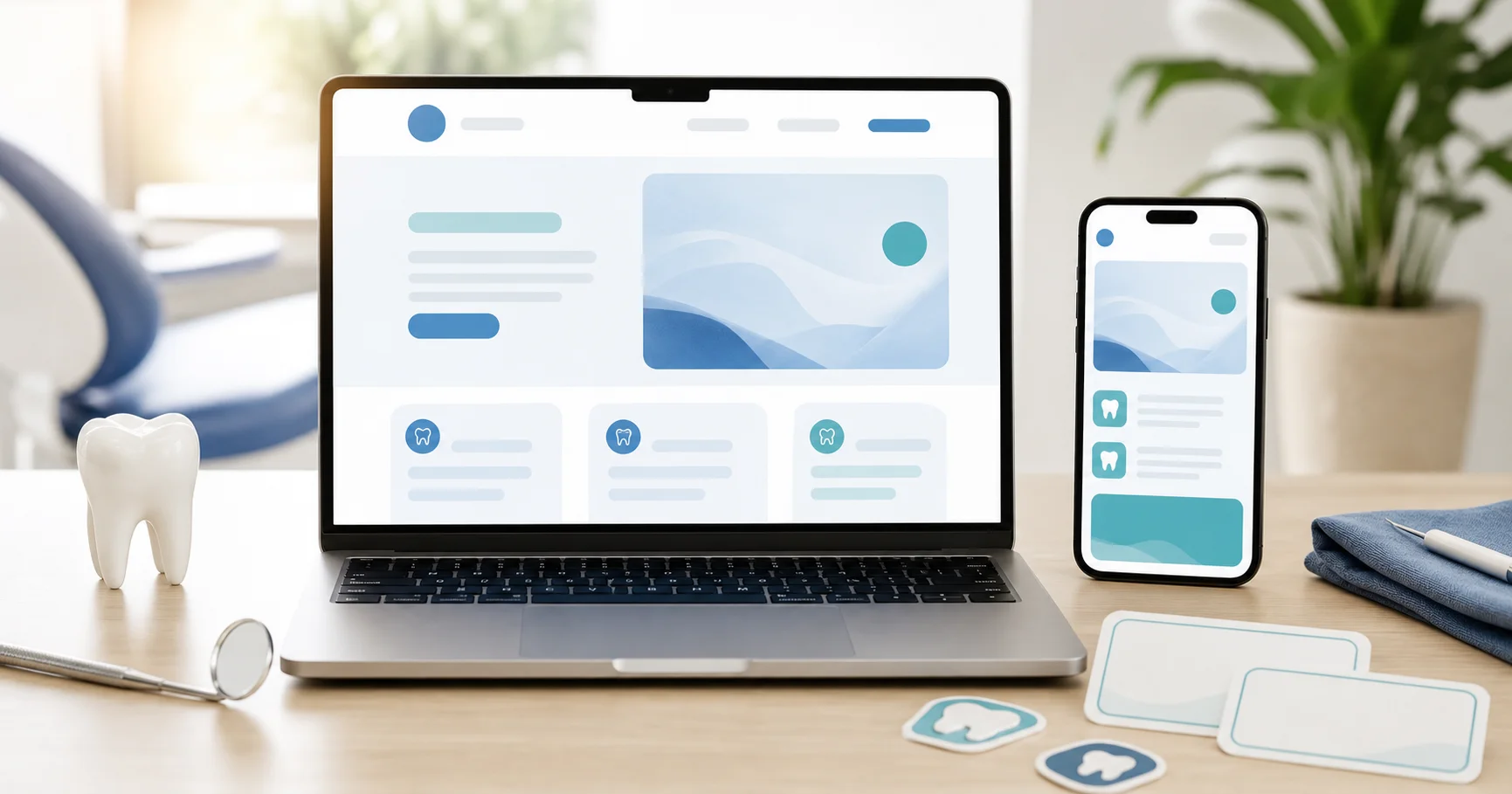
Patient-Friendly Dental Website Design: How Pennsylvania Dentists Turn Visitors into Appointments
A lot of dental websites look fine at a glance, but they quietly fail at the one job that matters: helping a nervous visitor feel confident enough to book.
That is where patient-friendly dental website design comes in. The best dental sites do more than look polished. They answer the questions people are already asking, reduce friction on mobile, and make the next step obvious — call, request an appointment, or send a message.
For Pennsylvania dentists, that usually means a website that feels local, trustworthy, fast, and easy to use. Not fancy for the sake of fancy. Useful.
What patients actually want from a dental website
Most patients are not browsing dental websites for fun. They are usually doing one of three things:
- checking if the practice looks trustworthy
- looking for the right service or procedure
- trying to schedule as fast as possible
If your site makes them dig for basic information, you lose momentum. A patient-friendly site makes the important stuff immediate:
- location and service area
- phone number and appointment button
- services offered
- insurance or payment basics
- office hours
- what to expect on the first visit
- reviews or testimonials
That is the practical heart of patient-friendly dental website design. It turns uncertainty into confidence.
The pages every dental website should have
If a dental site is missing key pages, it can still look good but fail to convert. At minimum, a practice site should include:
1. A strong home page
Your home page should explain who you help, what you do, and why someone should trust you within a few seconds.
2. Dedicated service pages
Each major service deserves its own page. That helps both patients and search engines understand what you offer.
3. About the doctor or practice page
People want to know who they are trusting with their care. A real about page helps.
4. Contact or appointment page
This should be easy to find and easy to use on a phone.
5. FAQs
FAQs are great for reducing friction. They can cover insurance, new patient visits, emergency care, and common treatment questions.
6. Reviews or testimonials
Social proof matters a lot for healthcare decisions.
If you already have a dental landing page, a blog post like this can support it by explaining the strategy behind the page and linking readers to the service itself.
Design elements that build trust fast
A patient-friendly design is not just about colors and layout. It is about trust signals.
Clear contact details
The phone number should not be hiding in a footer maze. Put it where people can see it immediately.
Mobile-first layout
Patients often search on their phone while comparing offices. Buttons, forms, and menus need to work cleanly on a small screen.
Real photos when possible
Stock imagery is fine in moderation, but real team photos and office photos help a lot.
Simple navigation
If the menu feels crowded or clever, it slows people down. Keep the main paths obvious.
Fast page speed
A slow site feels less trustworthy and can make visitors bounce before they ever read a page.
Strong calls to action
Use direct, low-friction prompts like:
- Request an Appointment
- Call the Office
- Book a Consultation
- Contact Us Today
These are small details, but they make a big difference in conversion rate.
Common mistakes that hurt dental websites
A lot of dental sites lose leads because of a few predictable problems:
- no obvious appointment button
- generic copy that sounds like every other practice
- outdated service pages
- cluttered homepage sections
- missing FAQ content
- weak mobile experience
- buried reviews
- no local proof
- confusing forms
Those issues do not just affect SEO. They affect whether someone trusts the practice enough to take action.
What to include on a dental service page
A good dental service page should do more than name a procedure. It should help patients understand the service and the next step.
A strong page usually includes:
- a plain-English explanation of the treatment
- who it is for
- what to expect
- common concerns or questions
- benefits and outcomes
- a call to action
This is where many sites miss the mark. They write for themselves instead of for the patient.
How Pennsylvania dentists can improve an existing website without starting over
Not every practice needs a full redesign tomorrow. Sometimes the smarter move is to improve the page structure and conversion flow first.
Start with:
- a clearer homepage headline
- stronger appointment CTAs
- a better mobile menu
- faster load speed
- updated service pages
- an FAQ section
- a trust-building about page
- internal links from blog posts to core service pages
If the site is older, a redesign may be the better move. That is especially true if the site is slow, hard to update, or not generating many inquiries.
When a dental website redesign is the right move
A redesign is usually worth considering if:
- the site looks dated
- mobile usability is poor
- patients cannot quickly find appointment info
- the site is not ranking or converting
- the layout feels cluttered or confusing
- the practice has expanded services
A redesign should not be cosmetic only. It should be a conversion project: better structure, clearer messaging, stronger trust signals, and a cleaner path to booking.
A simple patient-friendly dental website checklist
Use this quick checklist to pressure-test your site:
- Can a visitor find the phone number immediately?
- Is the appointment button visible on mobile?
- Do the service pages explain what patients need to know?
- Is there a real about page with practice credibility?
- Are reviews easy to find?
- Does the site load quickly?
- Are there FAQs for common concerns?
- Is the site easy to navigate without scrolling forever?
- Does every page point toward contact or booking?
If you answer “no” to several of these, your website may be leaking appointments.
How this supports your local SEO
A patient-friendly dental website design strategy also helps local SEO.
Why?
Because search engines tend to reward pages that are clear, relevant, and useful to real visitors. Better structure, stronger content, and more internal links can all help search visibility.
That is why a practice website should work like a connected system:
- the main dental service page attracts the right visitors
- supporting blog posts answer questions and build trust
- the contact page closes the loop
- maintenance and SEO keep the site healthy over time
Final thought
For Pennsylvania dental practices, the best website is not the most decorative one. It is the one that helps people feel safe enough to reach out.
That is the real job of patient-friendly dental website design: less friction, more trust, more appointment requests.
If you want help building a site that does that, start with our Web Design for Dentists in Pennsylvania, then explore Website Redesign Services in Pennsylvania if your current site needs a refresh.
You can also connect the dots with SEO Services for Pennsylvania Small Businesses and Website Maintenance & Support so the site keeps performing after launch.